Tratamientos del dolor | Nesa.World

Pain treatments

The autonomic nervous system (ANS) is the driver of central sensitisation and sympathetically maintained pain. You already use that language — but without measuring the causal variable. HRV predicts better than any nociceptive test who will become chronic, yet it is not yet your standard biomarker.

Non-invasive neuromodulation with NESA XSIGNAL® reduces sympathetic hyperactivity, improves movement tolerance and facilitates functional recovery. It is not an analgesic: it is an autonomic modulator that enhances your multimodal approach.

Treatment

Non-invasive neuromodulation with NESA XSIGNAL® acts directly on the autonomic nervous system, supporting processes that influence pain, tone, inflammation, microcirculation and sleep quality.

By targeting autonomic regulation, it may help reduce hyperreactivity, improve physiological variability and promote more efficient recovery between sessions.

It integrates as a supportive component within the treatment plan, without interfering with other interventions, and can be tailored to the patient’s profile: symptoms, sleep, pain, stress levels and load tolerance.

Functional objectives

  • Improved pain control and reduced hypersensitivity.
  • Better sleep and more restorative rest.
  • Improved sympathetic/parasympathetic balance.
  • Greater adherence to, and progression within, the treatment plan.

Applications

Common Clinical Presentations

  • Chronic or recurrent pain.
  • Neuropathic pain.
  • Hypersensitivity / central sensitisation.
  • Sleep disorders.
  • Elevated physiological stress / hyperarousal.
  • Autonomic dysregulation (sympathetic/parasympathetic imbalance).

As Support for Recovery Processes

  • Post-surgical recovery.
  • Inflammation and edema.
  • Support for microcirculation and tissue perfusion.

Benefits

  • Support for pain management: acute and persistent.
  • Improved sleep and recovery.
  • Reduced hyperreactivity and enhanced stress regulation.
  • Complementary, non-invasive and drug-free support.
  • Individualised protocols tailored to symptoms and autonomic profile.

Modulate the root. Enhance your treatment

Neuroanatomy of the autonomic nervous system associated with your clinical specialty

IMG-030_Tronco encefalico
IMG-023_Complejo vagal
IMG-012_Insula y corteza cingulada anterior
IMG-003_Menuda espinal_asta dorsal
IMG-026_Nervio vago
IMG-041_Sustancia gris periacueductal_Medula rostral ventromedial
IMG-047_Ganglios simpaticos

Introducing NESA XSIGNAL®

NESA XSIGNAL® is a non-invasive neuromodulation system that applies very low-intensity microcurrents through electrodes, with protocols oriented towards regulation of the autonomic nervous system. It is designed to integrate into clinical practice as part of the multimodal approach.

In Pain Treatments, the protocols act specifically on sympathetic hyperactivity and central sensitisation that perpetuate chronic pain and limit functional recovery.

Testimonials

“With NESA®, the cramps and burning disappeared, and now I sleep much better. The treatment allows me to maintain a good quality of life and continue working without pain limiting me.”
“I have been with NESA® for over a year and I feel good, more relaxed and with less anxiety. Now I sleep between five and six hours straight, without so many awakenings.”
“Since I use NESA®, I rest better and my pains have decreased. I feel more active, calm and with less anxiety. I come out of each session renewed.”
“After intensive therapy with NESA®, I improved in anxiety, depression and pain. I felt more energy, less stress and a much more restorative sleep.”
“After each session, the swelling disappears and I feel lighter. Now I rest better, move more easily and can stand without getting exhausted. I recommend NESA to those who suffer from chronic pain.”
“After two consecutive sessions, I woke up the next morning and didn’t feel any pain. That was the strongest thing I experienced: going from not being able to walk to feeling nothing.”
“From the second session there was already a change. Above all, the change was that I could rest more at night, which was a factor that was influencing me. I went from having a lot of pain to practically no pain.”
“With NESA®, the neuropathic pain in hands almost disappeared and sensitivity began to normalize. Sleep improved, fatigue decreased and now she is considering returning to work after a long period of sick leave.”
“NESA integrates with physiotherapy, psychology and psychonutrition, enabling a holistic approach. Its flexibility in adaptive programs allows personalizing treatment according to patient evolution.”
“After the third session, the neck pain disappeared and I began to sleep and rest well during the night. I reduced and stopped taking medication thanks to the significant improvement with the treatment. My stress and anxiety decreased notably, and now I rest well and wake up rested every morning.”
“NESA has come to add, it has helped me grow tremendously. I am very grateful and strongly recommend the device for multidisciplinary approach and to enhance everything globally for the patient.”
“The current technology presented is neuromodulation in the rehabilitation environment. This is a new technology that is producing enormous interest at the scientific world level and has the capacity to be applied in multiple scenarios.”
“I am very happy to use this NESA device. I have used it in many patients and I still have a lot to continue using it, but my example that always touches my heart is my father because it has changed his life.”
“We have done a clinical case with a chronic patient with multiple pathologies and the results with the machine have been quite good, especially in chronic pain, sleep and urinary incontinence.”
“NESA offers a unique opportunity to regulate the autonomic nervous system, something that is practically impossible to address with manual therapy. This is especially useful for patients with chronic pain who have not shown evolution with other treatments.”
“Complicated injuries, like fibromyalgia with more than 30 years of evolution or pain after surgeries, have shown significant progress with NESA, especially in cases where other treatments had not worked.”
“The bet on NESA is an excellent device with which I already have experience. All our patients who have chronic pain, which is always accompanied by a certain degree of insomnia, anxiety and depression, can benefit from this very novel and very practical system.”
“With NESA, patients notice rapid improvements in pain, rest and general well-being. Hearing a “I feel so good!”” has become commonplace.”””
“When learning about NESA, I saw that it could be used in many types of pathologies, from multiple sclerosis to fibromyalgia and cancer, conditions that often lack effective resources. I believe NESA can be a promising future to improve the symptoms of these patients.”
“I have the specific case of a patient with chronic pain of many years… Since we have incorporated NESA, he tells us that the medication enters him better and the effect it should have on him is more effective.”
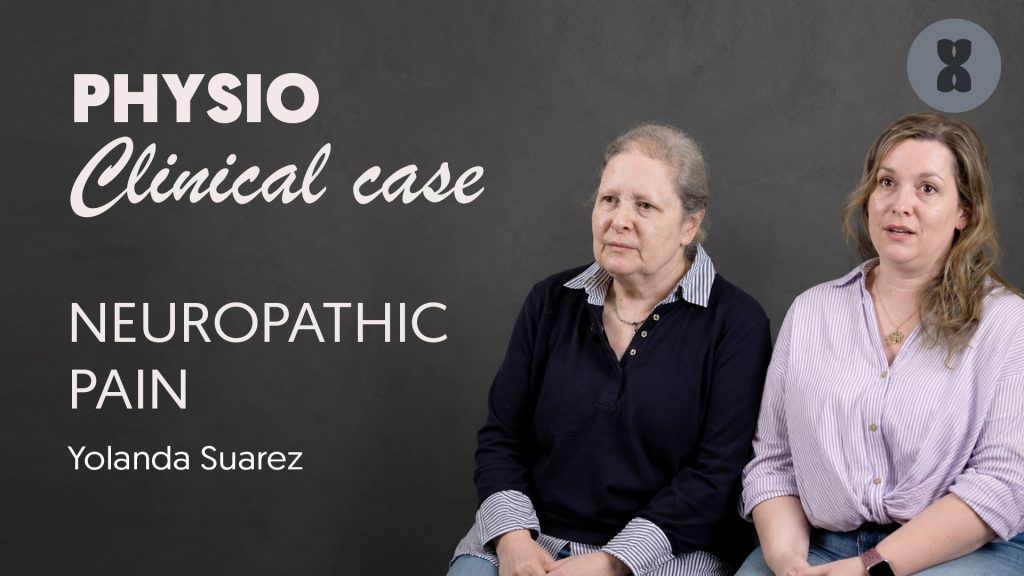
From the fifth session with NESA®, my neuropathic pain improved notably. I was able to resume my daily routine with less pain and more quality of life, also thanks to the deep relaxation effect of the treatment.
“I arrived with such severe lower back pain that I couldn’t even put my shoes on. After the first sessions with NESA®, I could already climb stairs. Now I sleep better, I no longer have anxiety or headaches. I have improved 100%. Even my wife and my father-in-law have also had incredible changes with NESA®. I recommend it with my eyes closed.”
“A woman diagnosed with fibromyalgia 7 or 8 years ago, very medicated, began to notice significant changes after 8-10 sessions. She is currently without medication and with a much better quality of life.”
“We are very happy with a case of a 52-year-old woman with fibromyalgia since age 32… She is in a very high state of happiness, has the feeling of being on a cloud.”
“NESA has shown a positive impact on neuropathic pain in chronic cases where other techniques have not been as effective, providing significant improvement in the patient’s quality of life.”
“NESA is painless, ideal for patients with fear of invasive techniques, and allows combining it with massages or pain education, optimizing treatment.”
“What patients value most is our constant updating and training to offer solutions to their problems, individualizing treatments and favoring optimal recovery.”
“The autonomic nervous system is one of the great forgotten ones, although we know it is involved in many pathological processes. With NESA, we can address it directly and obtain more lasting effects.”
“We have patients with fibromyalgia and a lot of fatigue who have improved sleep; in fact, they have gotten off medication.”
“With NESA, we not only treat the acute problem of the patient, but also added problems such as depression, lack of sleep or chronic fatigue.”
“A fibromyalgia patient improved in 4-5 months, going from a limited life to being able to go to the gym weekly and drastically reduce her pharmacology.”
“What patients value most about me is honesty and my constant concern to achieve the best results. I am quite restless and demanding with my results, and I think that’s something patients appreciate, even if I may not get the results they expect, they value the effort.”
“The training with NESA teaches you to use the technology from minute one and that each patient is different. According to clinical reasoning, the treatment varies, which is very personalized to each patient.”
“What patients value most about me is trust. I tell the patient what is there and if I can help them, I help them. If not, I also tell them I cannot help them. That is key in our practice.”
“NESA is very practical because it practically has no side effects. It is ideal for highly sensitized patients, in whom any technique or exercise worsens their state. Its main virtue is that it does not provoke exaggerated responses thanks to its low frequency.”
“NESA fascinated me by its capacity to improve sleep quality. Sleep regulates fundamental processes of the autonomic nervous system, such as the vagus nerve, crucial for physical and mental health.”
The impact of regulating the ANS in pain treatments
When specific work on the autonomic nervous system is incorporated, the effect is often systemic: reduced physiological “noise”, more consistent recovery and improved adaptive capacity. In pain treatments, this may translate into:
Supporting autonomic balance may expand the patient’s adaptive capacity, allowing local interventions such as manual therapy, exercise or procedures to be better tolerated and more consistent over time.

Key Evidence (3 papers):

  • Barkhudaryan A, et al. (2025) Autonomic dysfunction after stroke: an overview of recent advances. PMID: 40131648
  • Wu F, et al. (2022) Ocular autonomic nervous system: an update from anatomy to physiological functions. PMID: 35076641
  • Frandsen MN, et al. (2022) Preoperative heart rate variability as a predictor of perioperative outcomes: a systematic review without meta-analysis Journal of Clinical Monitoring and Computing. PMID: 35092527 DOI: 10.1007/s10877-022-00819-z
Persistent pain is associated with both autonomic dysregulation and altered central processing. Supporting autonomic regulation may help reduce hypervigilance and complement pain management strategies.

Key Evidence (3 papers):

  • Rampazo ÉP, et al. (2023) Heart rate variability in adults with chronic musculoskeletal pain: a systematic review. PMID: 37661339
  • Knudsen LF, et al. (2019) Complex regional pain syndrome: a focus on the autonomic nervous system. PMID: 31104164
  • Meeus M, et al. (2013) Heart rate variability in patients with fibromyalgia and patients with chronic fatigue syndrome: a systematic review. PMID: 23838093
Sleep is a key modulator of pain, inflammation and tissue repair. Supporting autonomic stability may help promote more restorative sleep patterns and more consistent recovery.

Key Evidence (3 papers):

  • Frandsen MN, et al. (2022) Preoperative heart rate variability as a predictor of perioperative outcomes: a systematic review without meta-analysis Journal of Clinical Monitoring and Computing. PMID: 35092527 DOI: 10.1007/s10877-022-00819-z
  • Cameron S, et al. (2024) Mind and skin: exploring the links between stress and dermatological disease. PMID: 37469218
  • Michalek-Zrabkowska M, et al. (2021) Cardiovascular implications of sleep bruxism: a systematic review. PMID: 34064229
The autonomic nervous system regulates vascular tone and perfusion. Improved regulation may support peripheral comfort, effort tolerance and recovery processes, particularly in patients with coldness, heaviness or reduced perfusion.

Key Evidence (3 papers):

  • Lee JY, et al. (2011) Heart rate variability in men with erectile dysfunction. PMID: 21811698
  • Goernig M, et al. (2008) Peripheral arterial disease alters heart rate variability. PMID: 18684283
  • Bachmann SB, et al. (2019) A distinct role of the autonomic nervous system in modulating the function of lymphatic vessels under physiological and tumor-draining conditions Cell Reports
Integrating non-invasive neuromodulation as a supportive approach may help address the regulatory component without replacing the primary treatment. The aim is additive: greater stability, improved recovery and better adherence.

Key Evidence (3 papers):

  • Costa V, et al. (2024) Transcutaneous vagus nerve stimulation effects on chronic pain: systematic review and meta-analysis Pain Reports. PMID: 39131814 DOI: 10.1097/PR9.0000000000001171
  • Souza R, et al. (2026) Neuromodulation of heart rate variability: a systematic review and meta-analysis Autonomic Neuroscience. PMID: 41506123 DOI: 10.1016/j.autneu.2026.103379
  • Yeom JW, et al. (2025) Transcutaneous auricular vagus nerve stimulation improves sleep quality in chronic insomnia disorder: a double-blind, randomized, sham-controlled trial Sleep Medicine. PMID: 40398066 DOI: 10.1016/j.sleep.2025.106579
  • am-controlled trial Sleep Medicine. PMID: 40398066 DOI: 10.1016/j.sleep.2025.106579

Resources

Training courses

Our training work at NESA Academic is aimed at professionals who want to integrate non-invasive neuromodulation and autonomic nervous system regulation into rehabilitation, physiotherapy and reconditioning. The content combines physiology, application criteria by specialty, safety and session design, so that integration is practical and consistent in the clinical setting.

Testimonials

Real cases and experiences from clinics and teams that integrate NESA XSIGNAL® into rehabilitation, physiotherapy and reconditioning. What comes up repeatedly: better rest, reduced reactivity during high-load periods and more sustained treatments over time. We also share clinical meetings where protocols, learnings and case discussions are presented.

News

Articles, bibliography and downloadable materials to go deeper into non-invasive neuromodulation, autonomic nervous system, heart rate variability, vasomotor control and neurovascular health applied to rehabilitation, physiotherapy and reconditioning. A living library to keep clinical criteria up to date and provide context for each indication.