
Frequently Asked Questions
Frequently asked questions about neuromodulation techniques
1º What components are included in the NESA® medical technology package when acquired by a clinic or hospital?


When a hospital or clinic acquires the NESA XSIGNAL® Non-Invasive Neuromodulation medical technology, the following components are included:
ACCESSORIES INCLUDED:
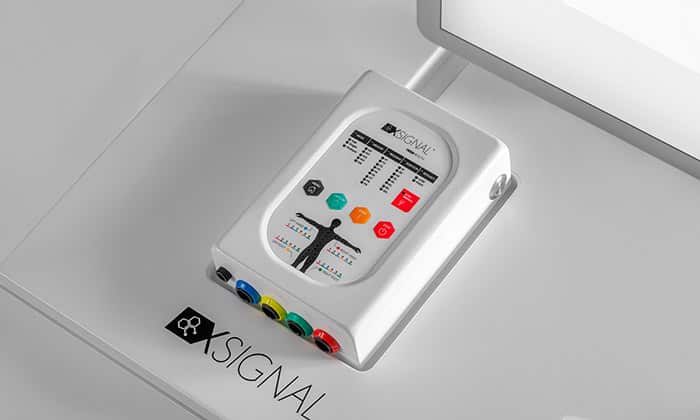
- NESA XSIGNAL® body.
- Set of four CEXT-N electric extenders, color-coded as blue, red, green, and yellow.
- Set of CONTACT-NC support cables with six connectors, including four units color-coded as blue, red, green, and yellow.
- One GDCN cable.
- Two bags of dermal electrodes.
- Sets of elastane gloves and anklets and a compressive model in sizes small (2x), medium (2x), and large (2x); *size changes available upon request.
- Sets of elastane gloves and anklets and a compressive model in sizes small (2x), medium (2x), and large (2x); *size changes available upon request.
- Sets of elastane gloves and anklets and a compressive model in sizes small (2x), medium (2x), and large (2x); *size changes available upon request.
- Heavy-duty case for transporting the XSIGNAL® medical device.
- XSIGNAL® backpack designed for device transport.
- Instruction manual.
- Timer.
- Furniture adapted with castors specifically for the XSIGNAL® medical device.
- Wecardio electrocardiogram.
- Tablet holder suitable for the furniture.
- Spike tool for detaching electrodes from gloves and anklets.
- Treatment manual.
- Pack of explanatory leaflets for patients.
- NESA WORLD CLINIC® towels.
- Vinilo sinapsis neuronal 120 cm x 180 cmNeural synapse vinyl measuring 120 cm x 180 cm.
[ES] WATCH VIDEO: Discover the XSIGNAL: Exclusive Unboxing with Fabiola Molina:
TRAINING INCLUDED:
Online campus clinical guides: This resource includes six hours of basic introductory training to provide comprehensive foundational knowledge on its usage. Additionally, there are over 24 hours of didactic audiovisual materials covering topics such as neuroanatomy, physiology, clinical reasoning, clinical cases, integration with therapies, scientifically validated patient assessments, and more.
(EN) WATCH VIDEO: Basic introductory online campus of Neuromodulation Non Invasive NESA®
NESA® Clinical Guidelines Campus
Online University Expert in Non-Invasive Neuromodulation NESA® of the University of Health Sciences of Las Palmas de Gran Canaria: 150 hours of content, 12 webinars in Spanish and English with 12 expert professors present in the forums and webinars.
[ES] WATCH VIDEO: Online University Expert in non-invasive neuromodulation NESA®
2º What are Autonomic Nervous System Readaptation Treatment Units, and could you explain the concept of NESA Clinics?


When a hospital or clinic acquires the NESA XSIGNAL® Non-Invasive Neuromodulation medical technology, the following components are included:
ACCESSORIES INCLUDED:
- NESA XSIGNAL® body.
- Set of four CEXT-N electric extenders, color-coded as blue, red, green, and yellow.
- Set of CONTACT-NC support cables with six connectors, including four units color-coded as blue, red, green, and yellow.
- One GDCN cable.
- Two bags of dermal electrodes.
- Sets of elastane gloves and anklets and a compressive model in sizes small (2x), medium (2x), and large (2x); *size changes available upon request.
- Sets of elastane gloves and anklets and a compressive model in sizes small (2x), medium (2x), and large (2x); *size changes available upon request.
- NESA XSIGNAL® PWR power supply and zone adapters.
- Heavy-duty case for transporting the XSIGNAL® medical device.
- XSIGNAL® backpack designed for device transport.
- Instruction manual.
- Timer.
- Furniture adapted with castors specifically for the XSIGNAL® medical device.
- Wecardio electrocardiogram.
- Tablet holder suitable for the furniture.
- Spike tool for detaching electrodes from gloves and anklets.
- Treatment manual.
- Pack of explanatory leaflets for patients.
- NESA WORLD CLINIC® towels.
- Vinilo sinapsis neuronal 120 cm x 180 cmNeural synapse vinyl measuring 120 cm x 180 cm.
[ES] WATCH VIDEO: Discover the XSIGNAL: Exclusive Unboxing with Fabiola Molina:
TRAINING INCLUDED:
Online campus clinical guides: This resource includes six hours of basic introductory training to provide comprehensive foundational knowledge on its usage. Additionally, there are over 24 hours of didactic audiovisual materials covering topics such as neuroanatomy, physiology, clinical reasoning, clinical cases, integration with therapies, scientifically validated patient assessments, and more.
(EN) WATCH VIDEO: Basic introductory online campus of Neuromodulation Non Invasive NESA®
NESA® Clinical Guidelines Campus
Online University Expert in Non-Invasive Neuromodulation NESA® of the University of Health Sciences of Las Palmas de Gran Canaria: 150 hours of content, 12 webinars in Spanish and English with 12 expert professors present in the forums and webinars.
[ES] WATCH VIDEO: Online University Expert in non-invasive neuromodulation NESA®
3º How is NESA® Non-Invasive Neuromodulation applied in daily clinical practice?


When a hospital or clinic acquires the NESA XSIGNAL® Non-Invasive Neuromodulation medical technology, the following components are included:
ACCESSORIES INCLUDED:
- NESA XSIGNAL® body.
- Set of four CEXT-N electric extenders, color-coded as blue, red, green, and yellow.
- Set of CONTACT-NC support cables with six connectors, including four units color-coded as blue, red, green, and yellow.
- One GDCN cable.
- Two bags of dermal electrodes.
- Sets of elastane gloves and anklets and a compressive model in sizes small (2x), medium (2x), and large (2x); *size changes available upon request.
- Sets of elastane gloves and anklets and a compressive model in sizes small (2x), medium (2x), and large (2x); *size changes available upon request.
- NESA XSIGNAL® PWR power supply and zone adapters.
- Heavy-duty case for transporting the XSIGNAL® medical device.
- XSIGNAL® backpack designed for device transport.
- Instruction manual.
- Timer.
- Furniture adapted with castors specifically for the XSIGNAL® medical device.
- Wecardio electrocardiogram.
- Tablet holder suitable for the furniture.
- Spike tool for detaching electrodes from gloves and anklets.
- Treatment manual.
- Pack of explanatory leaflets for patients.
- NESA WORLD CLINIC® towels.
- Vinilo sinapsis neuronal 120 cm x 180 cmNeural synapse vinyl measuring 120 cm x 180 cm.
[ES] WATCH VIDEO: Discover the XSIGNAL: Exclusive Unboxing with Fabiola Molina:
TRAINING INCLUDED:
Online campus clinical guides: This resource includes six hours of basic introductory training to provide comprehensive foundational knowledge on its usage. Additionally, there are over 24 hours of didactic audiovisual materials covering topics such as neuroanatomy, physiology, clinical reasoning, clinical cases, integration with therapies, scientifically validated patient assessments, and more.
(EN) WATCH VIDEO: Basic introductory online campus of Neuromodulation Non Invasive NESA®
NESA® Clinical Guidelines Campus
Online University Expert in Non-Invasive Neuromodulation NESA® of the University of Health Sciences of Las Palmas de Gran Canaria: 150 hours of content, 12 webinars in Spanish and English with 12 expert professors present in the forums and webinars.
[ES] WATCH VIDEO: Online University Expert in non-invasive neuromodulation NESA®
4º When should passive or active therapy be used with NESA® Non-Invasive Neuromodulation?


The choice between passive and active therapy using NESA® Non Invasive Neuromodulation technology is based on a number of clinical factors and the specific working dynamics of each clinic and its healthcare professionals. The following guide provides insights into when each type of therapy may be recommended:
Passive Therapy:
Objective: Passive therapy is aimed at delivering a relaxing and non-invasive treatment experience, requiring no active participation from the patient beyond simply relaxing and receiving treatment.
Recommended for: This mode is suitable for patients seeking a tranquil and less demanding treatment experience. It is particularly beneficial for those who can gain from neuromodulation without active engagement, such as individuals suffering from chronic pain, sleep disturbances, stress, anxiety, overactive bladder, or fatigue.
Active Therapy:
Objective: Active therapy involves more direct engagement from the patient and/or the health professional during the treatment session.
Recommended for: This approach is tailored for patients who need a more intensive and targeted treatment for specific conditions. It proves especially effective in physical rehabilitation within manual therapy settings, combining neuromodulation with therapeutic exercises to amplify the outcomes. It is also valuable for neurologists, psychiatrists, clinical psychologists, and speech therapists engaged in psychosomatic and cognitive behavioral interventions.
Clinical considerations:
– The decision to employ passive or active therapy should be based on the individual therapeutic goals, the patient’s health status, and the guidance provided by the clinical team.
– It is crucial to highlight that the personalization of treatment is essential for maximizing the benefits of NESA® Non-Invasive Neuromodulation.
Recommendation:
For a more comprehensive understanding of how passive and active therapies can be tailored to meet your specific needs or those of your patients, we encourage you to consult our clinical FAQs. Within these resources, you will find detailed information on each treatment modality and guidance on integrating them into treatment plans for various conditions.
5º How can I explain to the patient that the therapy is imperceptible, involving no sensation of heat, contraction, etc.? What are my first steps in overcoming my fears regarding this technology?
The choice between passive and active therapy using NESA® Non Invasive Neuromodulation technology is based on a number of clinical factors and the specific working dynamics of each clinic and its healthcare professionals. The following guide provides insights into when each type of therapy may be recommended:
Passive Therapy:
Objective: Passive therapy is aimed at delivering a relaxing and non-invasive treatment experience, requiring no active participation from the patient beyond simply relaxing and receiving treatment.
Recommended for: This mode is suitable for patients seeking a tranquil and less demanding treatment experience. It is particularly beneficial for those who can gain from neuromodulation without active engagement, such as individuals suffering from chronic pain, sleep disturbances, stress, anxiety, overactive bladder, or fatigue.
Active Therapy:
Objective: Active therapy involves more direct engagement from the patient and/or the health professional during the treatment session.
Recommended for: This approach is tailored for patients who need a more intensive and targeted treatment for specific conditions. It proves especially effective in physical rehabilitation within manual therapy settings, combining neuromodulation with therapeutic exercises to amplify the outcomes. It is also valuable for neurologists, psychiatrists, clinical psychologists, and speech therapists engaged in psychosomatic and cognitive behavioral interventions.
Clinical considerations:
– The decision to employ passive or active therapy should be based on the individual therapeutic goals, the patient’s health status, and the guidance provided by the clinical team.
– It is crucial to highlight that the personalization of treatment is essential for maximizing the benefits of NESA® Non-Invasive Neuromodulation.
Recommendation:
For a more comprehensive understanding of how passive and active therapies can be tailored to meet your specific needs or those of your patients, we encourage you to consult our clinical FAQs. Within these resources, you will find detailed information on each treatment modality and guidance on integrating them into treatment plans for various conditions.
6º How is passive therapy using NESA® medical technology recommended?


Here is a detailed guide on how to carry out passive therapy effectively:
Anamnesis focused on the autonomic nervous system:
Begin with a detailed anamnesis that includes relevant aspects of the patient's autonomic nervous system. This approach will help to customize the treatment to meet specific needs.
Objective assessments:
Perform objective assessments of the autonomic nervous system to facilitate clinical follow-up. These assessments may include measurements of cortisol and amylase, scientifically validated tests, ANS electrocardiograms, and the use of home autonomic assessment devices such as actigraphy before initiating treatment.
Removal of metals:
Ask the patient to remove, as far as possible, any metal on the hands and neck, such as jewellery, necklaces, bracelets, and watches, to avoid interference with the therapy.
Preparation of the laying area:
Clean the areas where the electrodes will be placed (feet, hands, and the area of the directional electrode) using alcohol and cotton wool to ensure optimal conductivity.
Position of the patient:
If on a stretcher, make sure the patient is in the supine position (lying on the back) or sitting comfortably in a good chair. If on a stretcher, use a half-roller or roller to relax the popliteal area.
Relaxing atmosphere:
We recommend covering the patient and dimming the ambient lighting, if possible, to foster a state of deep relaxation during the treatment.
Recommended sections in the FAQs
Autonomic Nervous System Readaptation Treatment Units:
Explore this section to learn how passive therapy using NESA® technology can be integrated into autonomic nervous system retraining programs, providing a comprehensive and personalized approach to treatment.
NESA Clinics concept:
Discover the unique approach of the NESA Clinics concept, where non-invasive neuromodulation is integrated with a multidisciplinary treatment strategy for various conditions, thereby maximizing therapeutic benefits for patients.
By adhering to these recommendations, you can enhance the application of passive therapy using NESA® medical technology, ensuring an effective, comfortable, and highly personalized therapeutic experience for your patients.
7º How is active therapy with NESA® medical technology recommended?
To ensure effective implementation and to fully leverage the benefits of this advanced technology, please adhere to the following recommendations:
Initial assessment:
It conducts a comprehensive patient assessment to determine the most appropriate combination of therapies. NESA® medical technology can be effectively integrated with various techniques, including manual and psychosomatic therapies.
Integration of Therapies:
NESA® medical technology is combined with selected manual or psychosomatic techniques. When active exercises are included, they should be of minimal load to complement the therapy without overburdening the patient.
Strategic Application of NESA® Technology:
NESA® technology is applied in a focal, metameric, or central manner, tailored to the therapeutic approach. The placement of the ECG electrode and lead is carefully managed to ensure that they do not interfere with the combined therapy.
Flexibility and Comfort During the Session:
Cables can be disconnected and reconnected to facilitate changes in the patient’s position during the session. This flexibility allows the session to be customized to the treatment needs without compromising the effectiveness of the technology.
Consultation of Clinical Doubts:
For any inquiries or additional information regarding the application of NESA® technology in specific clinical settings, healthcare professionals are encouraged to consult the clinical questions section in our FAQs. This resource offers further guidance.
Additional Advice:
Personalization of Treatment:
The flexibility of NESA® technology enables customization of treatments to meet the individual needs of each patient, thus optimizing therapeutic outcomes.
Creating an Appropriate Environment:
It is crucial to ensure that the therapeutic environment is conducive to exercise or movement, facilitating an active and effective treatment experience.
Active therapy with NESA® technology provides a unique opportunity to integrate non-invasive neuromodulation with a personalized therapeutic approach.
*For more detailed information, please refer to the Clinical FAQs.
8º How is NESA® medical technology installed in clinical settings?
Here are brief descriptions for each video on the installation and use of NESA XSIGNAL® medical technology:
NESA XSIGNAL® medical technology programming: Learn how to program your NESA XSIGNAL® medical device to optimize treatment protocols.
(EN) WATCH VIDEO XSIGNAL® programming. Switching on and programming
Cabling in NESA XSIGNAL® medical technology: Find out how to correctly place cabling in your NESA XSIGNAL® medical device to ensure optimal performance.
(EN) WATCH VIDEO: Cabling placement in XSIGNAL®
Maintenance of NESA XSIGNAL® medical technology cables: Keep your cables in perfect condition with these long-term maintenance tips
(EN) WATCH VIDEO: NESA XSIGNAL® medical technology cable maintenance: Keep your cables in perfect condition with these long-term maintenance tips
Attaching gloves and anklets to NESA XSIGNAL® medical technology cables: Step-by-step guide to connect gloves and anklets to the NESA XSIGNAL® medical device.
(EN) WATCH VIDEO:Attaching gloves and anklets to NESA XSIGNAL®
Fitting the patient with NESA XSIGNAL® medical technology gloves and anklets:Learn the correct way to place gloves and anklets on the patient for therapy.
(EN) WATCH VIDEO: Placing NESA XSIGNAL® medical technology gloves and ankle braces on the patient
NESA XSIGNAL® medical technology power supply: Important information about the battery charger and how to use it correctly in the NESA XSIGNAL® medical device.
(EN) WATCH VIDEO: Fuente de alimentación del XSIGNAL®
NESA XSIGNAL® Medical Technology Protective Case: Protect your NESA XSIGNAL® medical device with its uniquely designed magnetic protective case
(EN) WATCH VIDEO: NESA XSIGNAL® Medical Technology Protective Case
These brief descriptions and links to videos provide an overview of how to install and maintain NESA XSIGNAL® medical technology, ensuring its effective and long-lasting use.
9º How can gloves and ankle braces be fitted on amputees or children who have outgrown the extra small size of the NESA XSIGNAL® medical device?


NESA XSIGNAL® medical technology is versatile and adaptable, making it suitable for a wide range of patients, including those with amputations, malformations, or smaller limbs, such as children. Below, we will detail the methods for making these adaptations.
Adaptations for amputations or malformations:
For patients with amputations or malformations, gloves and anklets can be adjusted to be placed more cranially, aligning with the neuroanatomy of the peripheral nerves. This adjustment ensures that neuromodulation is effectively targeted to the desired areas, enhancing the therapeutic benefits of the NESA XSIGNAL® medical technology.
Use in children with small limbs:
In cases where children or patients with small extremities find the ‘XS' size too large, specific modifications can be made to ensure adequate and comfortable contact. These adjustments may include altering gloves and anklets or employing special adapters designed to accommodate smaller sizes.
10º What is the warranty period for the NESA XSIGNAL® medical device, and how long does it last?
NESA XSIGNAL® medical technology is versatile and adaptable, making it suitable for a wide range of patients, including those with amputations, malformations, or smaller limbs, such as children. Below, we will detail the methods for making these adaptations.
Adaptations for amputations or malformations:
For patients with amputations or malformations, gloves and anklets can be adjusted to be placed more cranially, aligning with the neuroanatomy of the peripheral nerves. This adjustment ensures that neuromodulation is effectively targeted to the desired areas, enhancing the therapeutic benefits of the NESA XSIGNAL® medical technology.
Use in children with small limbs:
In cases where children or patients with small extremities find the ‘XS' size too large, specific modifications can be made to ensure adequate and comfortable contact. These adjustments may include altering gloves and anklets or employing special adapters designed to accommodate smaller sizes.
11º Durability of the NESA XSIGNAL® medical device?
NESA XSIGNAL® medical technology is versatile and adaptable, making it suitable for a wide range of patients, including those with amputations, malformations, or smaller limbs, such as children. Below, we will detail the methods for making these adaptations.
Adaptations for amputations or malformations:
For patients with amputations or malformations, gloves and anklets can be adjusted to be placed more cranially, aligning with the neuroanatomy of the peripheral nerves. This adjustment ensures that neuromodulation is effectively targeted to the desired areas, enhancing the therapeutic benefits of the NESA XSIGNAL® medical technology.
Use in children with small limbs:
In cases where children or patients with small extremities find the ‘XS' size too large, specific modifications can be made to ensure adequate and comfortable contact. These adjustments may include altering gloves and anklets or employing special adapters designed to accommodate smaller sizes.
12º Does the NESA® Non-Invasive Neuromodulation medical technology hold the necessary health and ISO certifications for medical device manufacturing?
NESA XSIGNAL® medical technology is versatile and adaptable, making it suitable for a wide range of patients, including those with amputations, malformations, or smaller limbs, such as children. Below, we will detail the methods for making these adaptations.
Adaptations for amputations or malformations:
For patients with amputations or malformations, gloves and anklets can be adjusted to be placed more cranially, aligning with the neuroanatomy of the peripheral nerves. This adjustment ensures that neuromodulation is effectively targeted to the desired areas, enhancing the therapeutic benefits of the NESA XSIGNAL® medical technology.
Use in children with small limbs:
In cases where children or patients with small extremities find the ‘XS' size too large, specific modifications can be made to ensure adequate and comfortable contact. These adjustments may include altering gloves and anklets or employing special adapters designed to accommodate smaller sizes.
13º What are the rules for the use of NESA XSIGNAL® medical technology?
NESA XSIGNAL® medical technology is versatile and adaptable, making it suitable for a wide range of patients, including those with amputations, malformations, or smaller limbs, such as children. Below, we will detail the methods for making these adaptations.
Adaptations for amputations or malformations:
For patients with amputations or malformations, gloves and anklets can be adjusted to be placed more cranially, aligning with the neuroanatomy of the peripheral nerves. This adjustment ensures that neuromodulation is effectively targeted to the desired areas, enhancing the therapeutic benefits of the NESA XSIGNAL® medical technology.
Use in children with small limbs:
In cases where children or patients with small extremities find the ‘XS' size too large, specific modifications can be made to ensure adequate and comfortable contact. These adjustments may include altering gloves and anklets or employing special adapters designed to accommodate smaller sizes.
14º Frequently Asked Questions (FAQs) Regarding Spare Parts and Maintenance of NESA XSIGNAL® Medical Technology


NESA XSIGNAL® medical technology is versatile and adaptable, making it suitable for a wide range of patients, including those with amputations, malformations, or smaller limbs, such as children. Below, we will detail the methods for making these adaptations.
Adaptations for amputations or malformations:
For patients with amputations or malformations, gloves and anklets can be adjusted to be placed more cranially, aligning with the neuroanatomy of the peripheral nerves. This adjustment ensures that neuromodulation is effectively targeted to the desired areas, enhancing the therapeutic benefits of the NESA XSIGNAL® medical technology.
Use in children with small limbs:
In cases where children or patients with small extremities find the ‘XS' size too large, specific modifications can be made to ensure adequate and comfortable contact. These adjustments may include altering gloves and anklets or employing special adapters designed to accommodate smaller sizes.
15º How often is it recommended to check the technology and what are the maintenance recommendations?
NESA XSIGNAL® medical technology is versatile and adaptable, making it suitable for a wide range of patients, including those with amputations, malformations, or smaller limbs, such as children. Below, we will detail the methods for making these adaptations.
Adaptations for amputations or malformations:
For patients with amputations or malformations, gloves and anklets can be adjusted to be placed more cranially, aligning with the neuroanatomy of the peripheral nerves. This adjustment ensures that neuromodulation is effectively targeted to the desired areas, enhancing the therapeutic benefits of the NESA XSIGNAL® medical technology.
Use in children with small limbs:
In cases where children or patients with small extremities find the ‘XS' size too large, specific modifications can be made to ensure adequate and comfortable contact. These adjustments may include altering gloves and anklets or employing special adapters designed to accommodate smaller sizes.
16º Frequently Asked Questions (FAQs) about NESA XSIGNAL® Gloves and Ankle Braces


NESA XSIGNAL® medical technology is versatile and adaptable, making it suitable for a wide range of patients, including those with amputations, malformations, or smaller limbs, such as children. Below, we will detail the methods for making these adaptations.
Adaptations for amputations or malformations:
For patients with amputations or malformations, gloves and anklets can be adjusted to be placed more cranially, aligning with the neuroanatomy of the peripheral nerves. This adjustment ensures that neuromodulation is effectively targeted to the desired areas, enhancing the therapeutic benefits of the NESA XSIGNAL® medical technology.
Use in children with small limbs:
In cases where children or patients with small extremities find the ‘XS' size too large, specific modifications can be made to ensure adequate and comfortable contact. These adjustments may include altering gloves and anklets or employing special adapters designed to accommodate smaller sizes.
17º Frequently Asked Questions (FAQs) about XSIGNAL® medical device extension cables


NESA XSIGNAL® medical technology is versatile and adaptable, making it suitable for a wide range of patients, including those with amputations, malformations, or smaller limbs, such as children. Below, we will detail the methods for making these adaptations.
Adaptations for amputations or malformations:
For patients with amputations or malformations, gloves and anklets can be adjusted to be placed more cranially, aligning with the neuroanatomy of the peripheral nerves. This adjustment ensures that neuromodulation is effectively targeted to the desired areas, enhancing the therapeutic benefits of the NESA XSIGNAL® medical technology.
Use in children with small limbs:
In cases where children or patients with small extremities find the ‘XS' size too large, specific modifications can be made to ensure adequate and comfortable contact. These adjustments may include altering gloves and anklets or employing special adapters designed to accommodate smaller sizes.
18º Frequently Asked Questions (FAQs) about the NESA XSIGNAL® Medical Device GDCN Addressing Cable


NESA XSIGNAL® medical technology is versatile and adaptable, making it suitable for a wide range of patients, including those with amputations, malformations, or smaller limbs, such as children. Below, we will detail the methods for making these adaptations.
Adaptations for amputations or malformations:
For patients with amputations or malformations, gloves and anklets can be adjusted to be placed more cranially, aligning with the neuroanatomy of the peripheral nerves. This adjustment ensures that neuromodulation is effectively targeted to the desired areas, enhancing the therapeutic benefits of the NESA XSIGNAL® medical technology.
Use in children with small limbs:
In cases where children or patients with small extremities find the ‘XS' size too large, specific modifications can be made to ensure adequate and comfortable contact. These adjustments may include altering gloves and anklets or employing special adapters designed to accommodate smaller sizes.
19º Frequently Asked Questions (FAQs) about XSIGNAL® medical device disposable dermal addressable. electrodes (ECGs)


NESA XSIGNAL® medical technology is versatile and adaptable, making it suitable for a wide range of patients, including those with amputations, malformations, or smaller limbs, such as children. Below, we will detail the methods for making these adaptations.
Adaptations for amputations or malformations:
For patients with amputations or malformations, gloves and anklets can be adjusted to be placed more cranially, aligning with the neuroanatomy of the peripheral nerves. This adjustment ensures that neuromodulation is effectively targeted to the desired areas, enhancing the therapeutic benefits of the NESA XSIGNAL® medical technology.
Use in children with small limbs:
In cases where children or patients with small extremities find the ‘XS' size too large, specific modifications can be made to ensure adequate and comfortable contact. These adjustments may include altering gloves and anklets or employing special adapters designed to accommodate smaller sizes.
20º Frequently Asked Questions (FAQs) about the NESA XSIGNAL® Medical Device Power Supply


NESA XSIGNAL® medical technology is versatile and adaptable, making it suitable for a wide range of patients, including those with amputations, malformations, or smaller limbs, such as children. Below, we will detail the methods for making these adaptations.
Adaptations for amputations or malformations:
For patients with amputations or malformations, gloves and anklets can be adjusted to be placed more cranially, aligning with the neuroanatomy of the peripheral nerves. This adjustment ensures that neuromodulation is effectively targeted to the desired areas, enhancing the therapeutic benefits of the NESA XSIGNAL® medical technology.
Use in children with small limbs:
In cases where children or patients with small extremities find the ‘XS' size too large, specific modifications can be made to ensure adequate and comfortable contact. These adjustments may include altering gloves and anklets or employing special adapters designed to accommodate smaller sizes.
21º What is the NESA XSIGNAL® medical device carrying case?


What is the NESA XSIGNAL® medical device carrying case?
The NESA XSIGNAL® Carrying Case (Ref.: XS0003) is a storage and transport solution designed specifically for the NESA XSIGNAL® medical device. Manufactured from high-quality materials, this case ensures the protection and ease of movement of your non-invasive neuromodulation equipment.
Main Features:
Material: Made from durable polypropylene with a polystyrene structure in anthracite color.
Manufacturing details: Includes die cutting and JK HD laser marking on the front and base, providing a professional and durable finish.
Lid: Features a 5 mm black PVC lid, machined with UV printing for a sleek appearance and additional protection.
Timer: Equipped with a white MKT timer and a methacrylate identifier.
*Frequently asked questions about its use
Is the NESA XSIGNAL® medical device suitable for transport?
For long journeys: The carrying case is highly recommended for long journeys due to its robustness and superior protection. It is designed to ensure the integrity of the NESA XSIGNAL® and its accessories, protecting them from impact, dust, and moisture during transport.
For short trips: For shorter or everyday trips, it is recommended to use the XSIGNAL® equipment backpack, designed to offer a lighter and more practical solution without compromising the protection of the equipment.
Importance of the suitcase:
The NESA XSIGNAL® carrying case not only facilitates the safe transport of the device and its components but also reflects NESA WORLD®'s commitment to quality and attention to detail. Its custom design and advanced manufacturing features ensure that your neuromodulation equipment is always protected and ready to use, no matter where your professional or personal practice takes you.
Choosing the NESA XSIGNAL® carrying case means choosing the peace of mind that comes with knowing your device is protected with the best possible protection, allowing you to concentrate on providing safe and effective treatments to your patients.
22º Frequently Asked Questions (FAQs) about the NESA XSIGNAL® backpack




What is the NESA XSIGNAL® medical device carrying backpack?
The NESA XSIGNAL® Carrying Backpack (Ref.: ACC0007) is a carrying solution specifically designed for the NESA XSIGNAL® medical device and its accessories. Crafted with high-quality materials and tailored features for equipment comfort and safety, this backpack is the ideal companion for healthcare professionals on the move.
Main Features:
Material: 600D Polyester 330g/m2, robust and durable.
Dimensions: 360460180 mm, spacious for storing the device and accessories.
Protection: Anti-humidity treatment and black polystyrene D40 with laser die-cutting to cushion and protect the contents.
Design: Thermo WH print on exterior and interior, with reinforced handle seams for durability.
*Frequently asked questions about its use
Is the NESA XSIGNAL® device suitable for transport?
For short trips: Yes, the backpack is ideal for short trips, offering a practical and safe way to carry the device and its accessories. Perfect for day-to-day use by the healthcare professional or for home treatment.
For long journeys: For long journeys where checked luggage is required, we recommend opting for the NESA XSIGNAL® carry case for additional protection.
Is it fully adapted to transport the NESA XSIGNAL® medical device?
Absolutely, the backpack has been designed with the specific needs of the NESA XSIGNAL® device and its accessories in mind. Its use is highly recommended for healthcare professionals who need mobility without compromising the safety of the equipment. Ideal for personal use after work, weekends for recovery, home treatment, or patient rentals.
Importance of the transport rucksack
The NESA XSIGNAL® carrying backpack not only makes it easy to transport the device and its components safely and comfortably, but also reflects NESA WORLD®'s commitment to quality and functionality. Its customised design and protective features ensure that your neuromodulation equipment is always ready and in perfect condition, allowing you to concentrate on providing the best care for your patients.
Opting for the NESA XSIGNAL® backpack is choosing comfort and safety, ensuring that your device is protected and accessible, no matter where your professional or personal practice takes it.
23º Frequently Asked Questions (FAQs) about the NESA XSIGNAL® body protector cover


What is the NESA XSIGNAL® body protection cover?
The NESA XSIGNAL® Body Protection Case (Ref.: ACC0004) is an accessory specifically designed to provide an extra layer of protection for the NESA XSIGNAL® medical device. This case combines functionality and style to ensure that your equipment remains safe and in optimum condition, even in the most demanding environments.
Main Features:
Outer material: Made of high-quality black leatherette, providing durability and resistance to the cover.
Interior: The interior is lined with soft black velvet, with AK2 laser die-cutting to ensure a snug fit around the body of the device, protecting it from scratches and bumps.
UV marking: The cover has a two-zone UV marking in white (WH2), adding an elegant and distinctive touch to the design.
*Frequently Asked Questions on Its Use:
Is it advisable to use the NESA XSIGNAL® protective cover?
Yes, it is advisable to use the protective cover for the NESA XSIGNAL® medical device. Although the device is designed to be rugged and suitable for active use, the protective sleeve provides an additional layer of safety against accidental drops, bumps, or any other incidents that may occur in the working environment, such as on furniture or stretchers. Using the protective case helps to keep the device in the best possible condition, prolonging its lifespan, and ensuring optimal performance.
24º Frequently asked questions (FAQs) about the NESA XSIGNAL® device adapted cabinet


What is the NESA XSIGNAL® body protection cover?
The NESA XSIGNAL® Body Protection Case (Ref.: ACC0004) is an accessory specifically designed to provide an extra layer of protection for the NESA XSIGNAL® medical device. This case combines functionality and style to ensure that your equipment remains safe and in optimum condition, even in the most demanding environments.
Main Features:
Outer material: Made of high-quality black leatherette, providing durability and resistance to the cover.
Interior: The interior is lined with soft black velvet, with AK2 laser die-cutting to ensure a snug fit around the body of the device, protecting it from scratches and bumps.
UV marking: The cover has a two-zone UV marking in white (WH2), adding an elegant and distinctive touch to the design.
*Frequently Asked Questions on Its Use:
Is it advisable to use the NESA XSIGNAL® protective cover?
Yes, it is advisable to use the protective cover for the NESA XSIGNAL® medical device. Although the device is designed to be rugged and suitable for active use, the protective sleeve provides an additional layer of safety against accidental drops, bumps, or any other incidents that may occur in the working environment, such as on furniture or stretchers. Using the protective case helps to keep the device in the best possible condition, prolonging its lifespan, and ensuring optimal performance.
25º Frequently Asked Questions (FAQs) about the electrocardiogram included with the NESA XSIGNAL® device


What is the NESA XSIGNAL® body protection cover?
The NESA XSIGNAL® Body Protection Case (Ref.: ACC0004) is an accessory specifically designed to provide an extra layer of protection for the NESA XSIGNAL® medical device. This case combines functionality and style to ensure that your equipment remains safe and in optimum condition, even in the most demanding environments.
Main Features:
Outer material: Made of high-quality black leatherette, providing durability and resistance to the cover.
Interior: The interior is lined with soft black velvet, with AK2 laser die-cutting to ensure a snug fit around the body of the device, protecting it from scratches and bumps.
UV marking: The cover has a two-zone UV marking in white (WH2), adding an elegant and distinctive touch to the design.
*Frequently Asked Questions on Its Use:
Is it advisable to use the NESA XSIGNAL® protective cover?
Yes, it is advisable to use the protective cover for the NESA XSIGNAL® medical device. Although the device is designed to be rugged and suitable for active use, the protective sleeve provides an additional layer of safety against accidental drops, bumps, or any other incidents that may occur in the working environment, such as on furniture or stretchers. Using the protective case helps to keep the device in the best possible condition, prolonging its lifespan, and ensuring optimal performance.
26º Frequently Asked Questions (FAQs) about the tablet and tablet holders Included with the NESA XSIGNAL® medical device
What is the NESA XSIGNAL® body protection cover?
The NESA XSIGNAL® Body Protection Case (Ref.: ACC0004) is an accessory specifically designed to provide an extra layer of protection for the NESA XSIGNAL® medical device. This case combines functionality and style to ensure that your equipment remains safe and in optimum condition, even in the most demanding environments.
Main Features:
Outer material: Made of high-quality black leatherette, providing durability and resistance to the cover.
Interior: The interior is lined with soft black velvet, with AK2 laser die-cutting to ensure a snug fit around the body of the device, protecting it from scratches and bumps.
UV marking: The cover has a two-zone UV marking in white (WH2), adding an elegant and distinctive touch to the design.
*Frequently Asked Questions on Its Use:
Is it advisable to use the NESA XSIGNAL® protective cover?
Yes, it is advisable to use the protective cover for the NESA XSIGNAL® medical device. Although the device is designed to be rugged and suitable for active use, the protective sleeve provides an additional layer of safety against accidental drops, bumps, or any other incidents that may occur in the working environment, such as on furniture or stretchers. Using the protective case helps to keep the device in the best possible condition, prolonging its lifespan, and ensuring optimal performance.
27º Frequently Asked Questions (FAQs) about the advertising included with the NESA XSIGNAL® Medical Device
What is the NESA XSIGNAL® body protection cover?
The NESA XSIGNAL® Body Protection Case (Ref.: ACC0004) is an accessory specifically designed to provide an extra layer of protection for the NESA XSIGNAL® medical device. This case combines functionality and style to ensure that your equipment remains safe and in optimum condition, even in the most demanding environments.
Main Features:
Outer material: Made of high-quality black leatherette, providing durability and resistance to the cover.
Interior: The interior is lined with soft black velvet, with AK2 laser die-cutting to ensure a snug fit around the body of the device, protecting it from scratches and bumps.
UV marking: The cover has a two-zone UV marking in white (WH2), adding an elegant and distinctive touch to the design.
*Frequently Asked Questions on Its Use:
Is it advisable to use the NESA XSIGNAL® protective cover?
Yes, it is advisable to use the protective cover for the NESA XSIGNAL® medical device. Although the device is designed to be rugged and suitable for active use, the protective sleeve provides an additional layer of safety against accidental drops, bumps, or any other incidents that may occur in the working environment, such as on furniture or stretchers. Using the protective case helps to keep the device in the best possible condition, prolonging its lifespan, and ensuring optimal performance.
Contact form for neuromodulation techniques
Have a question or ready to place an order? Our Customer Service team is here to help. Simply complete the form below and we’ll get back to you promptly.
Thank you for placing your trust in us.
"*" indicates required fields